
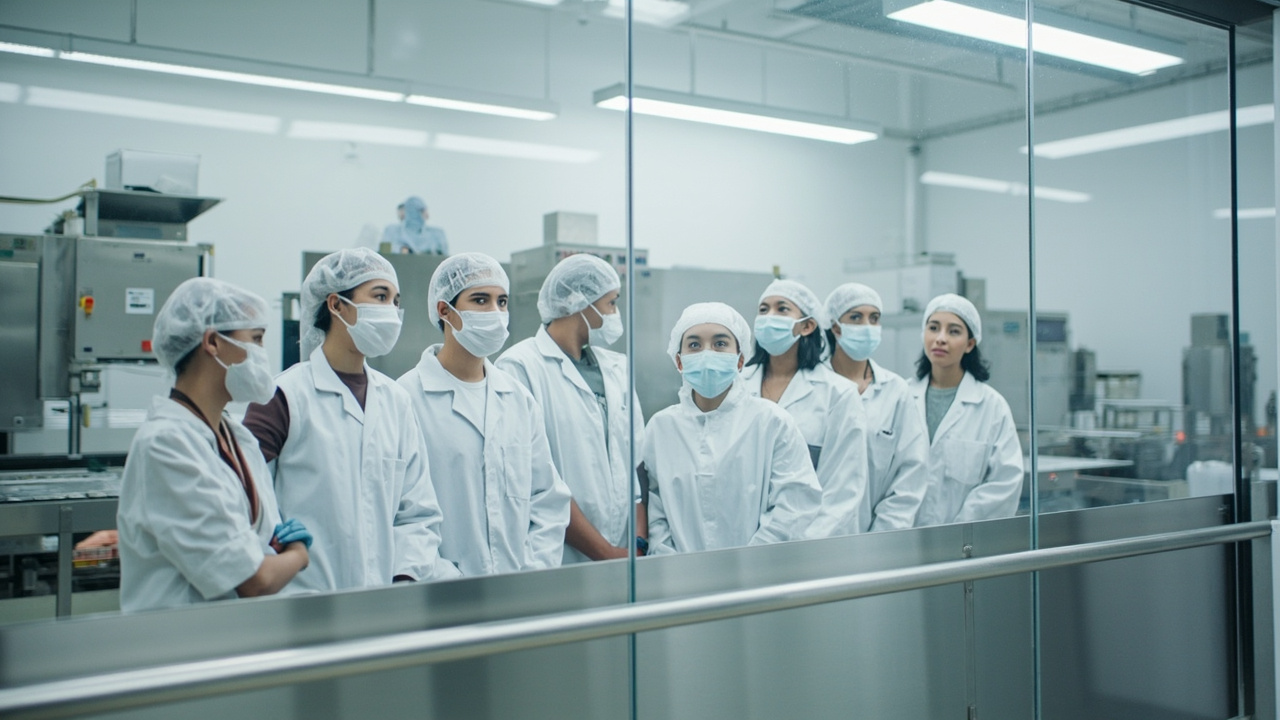
Students on a Harris County Meats tour at 7907 Miller Rd 2, Houston, TX 77049, experience a comprehensive educational journey through livestock handling, harvesting, and meat processing. These free private tours for schools, FFA, and 4-H groups include lunch and can be booked by calling (346) 417-3349.
The tour progresses from the neighboring harvest facility to the cutting room and then to the on-site, USDA-inspected poultry plant.
Key Takeaways
- Harris County Meats offers free, private educational tours for schools, FFA, and 4-H groups, including lunch, focusing on meat processing near Houston.
- The tour covers the entire process from livestock handling and harvesting at the adjacent facility to the cutting room and the USDA-inspected poultry plant.
- Students learn about critical industry practices such as HACCP, temperature control, traceability, and food safety standards.
- The experience highlights various career paths within animal science, meat science, inspection, and retail meat operations.
- Tours are tailored to operational activities, emphasizing safety, animal welfare, and inspection protocols, requiring advance scheduling.
Educational tours of agricultural and food processing facilities provide invaluable real-world insights for students interested in animal science, food systems, and related careers. Harris County Meats, a family-owned business with over 15 years of experience through Harris County Farms, offers a unique opportunity for students to observe the journey of livestock from farm to market. These tours are designed to be informative, practical, and directly relevant to curriculum studies in agriculture and vocational training.
What is the typical itinerary for a student tour at Harris County Meats?
The typical itinerary for a student tour at Harris County Meats provides a sequential walkthrough of the meat processing journey, starting with the harvest facility and concluding with the retail-focused cutting room and poultry plant. The tour begins at the neighboring Harris County Farms harvest facility, where students observe livestock handling, harvesting, and initial inspection processes. Following this, the tour moves to the cutting room, demonstrating how carcasses are broken down into the various cuts sold in the meat market. The final stop is the on-site poultry plant, which operates under USDA inspection, showcasing poultry processing procedures.
Throughout the tour, emphasis is placed on food safety, regulatory compliance, and career opportunities within the industry.
How do students learn about livestock handling and harvesting?
Students learn about livestock handling and harvesting by observing the processes at the adjacent Harris County Farms facility. This segment of the tour focuses on the ethical treatment of animals, efficient handling techniques, and the initial stages of processing. Guides explain the importance of minimizing stress on animals, which contributes to both animal welfare and meat quality. Students witness the harvesting process, which is conducted under strict protocols to ensure humane practices.
The role of inspection at this critical stage is also highlighted, demonstrating how animals are assessed for health and suitability for processing before entering the food supply chain.
What aspects of inspection and sanitation are covered?
Aspects of inspection and sanitation are thoroughly covered throughout the tour, emphasizing their critical role in ensuring food safety and quality. At the harvest facility, students learn about inspection processes that identify any health issues in the animals or carcasses. The tour also details the rigorous sanitation procedures implemented to prevent contamination, including equipment cleaning, facility hygiene, and waste management. In the cutting room and poultry plant, students observe how Hazard Analysis and Critical Control Points (HACCP) principles are applied to maintain a safe processing environment and ensure product integrity U.S. Department of Agriculture (USDA) - Food Safety and Inspection Service (FSIS).
What do students observe in the cutting room and poultry plant?
In the cutting room, students observe skilled butchers transforming animal carcasses into retail-ready cuts, gaining insight into the anatomy of different livestock. This part of the tour demonstrates how carcasses become the various cuts sold in the meat case. The process of trimming, deboning, and portioning is explained, along with the tools and techniques used by professional butchers. Students also learn about the importance of temperature control in maintaining meat quality and safety during cutting and packaging.
The poultry plant, operating under USDA inspection, provides a focused view of poultry processing. Here, students see the steps involved in processing chickens, from initial handling to packaging. The tour highlights the specialized equipment used in poultry processing and the stringent hygiene standards required for USDA compliance. This segment offers a clear understanding of how poultry products are prepared for market, emphasizing the differences and similarities between red meat and poultry processing.
How does the tour demonstrate the journey from carcass to retail cut?
The tour demonstrates the journey from carcass to retail cut by providing a direct visual progression through the facility. After observing the initial harvesting, students move to the cutting room where whole carcasses are systematically broken down. Guides explain how different sections of the animal yield specific cuts, such as how a beef loin becomes various steaks or how a pork shoulder is prepared for roasts and chops. This hands-on observation helps students understand the value chain of meat production, from the raw material to the finished product displayed in the meat market.
The process showcases the skill and precision required in butchery to maximize yield and meet consumer demand for diverse meat products.
What role does USDA inspection play in the poultry plant?
USDA inspection plays a crucial role in the poultry plant by ensuring that all processing activities meet federal food safety and quality standards. The poultry plant at Harris County Meats operates under USDA inspection, meaning inspectors monitor compliance. This oversight covers everything from facility sanitation and equipment maintenance to processing procedures, product labeling, and humane handling practices U.S. Department of Agriculture (USDA) - Food Safety and Inspection Service (FSIS). Students learn that USDA inspection provides a critical layer of consumer protection, guaranteeing that poultry products are safe, wholesome, and accurately labeled before they reach the market.
This segment of the tour underscores the importance of regulatory bodies in the food industry.
What educational topics are covered during the tour?
During the tour, a range of educational topics are covered, providing students with a comprehensive understanding of the meat industry. Key areas include Hazard Analysis and Critical Control Points (HACCP) principles, which are fundamental to food safety management, and the importance of precise temperature control throughout the processing chain. Students also learn about product traceability, understanding how meat products are tracked from their origin to the consumer, which is vital for quality control and recall procedures. Beyond technical aspects, the tour explores various career paths within animal science, meat science, food inspection, and retail meat operations, offering insights into potential future professions.
How are HACCP and food safety practices highlighted?
HACCP and food safety practices are highlighted throughout the tour by demonstrating their practical application at each stage of processing. Students learn that HACCP is a systematic preventive approach to food safety from biological, chemical, and physical hazards in production processes that can cause the finished product to be unsafe, and designs measures to reduce these risks to a safe level U.S. Department of Agriculture (USDA) - Food Safety and Inspection Service (FSIS). Examples include observing critical control points for temperature during storage, sanitation protocols for equipment, and personal hygiene requirements for staff. The guides explain how these practices are implemented to prevent contamination, ensure product integrity, and comply with federal regulations, providing a real-world context for theoretical food safety knowledge.
What career opportunities are discussed in animal and meat science?
Career opportunities in animal and meat science are discussed to inspire students and connect their educational experience to future professional paths. The tour highlights roles such as those in animal science, meat science, inspection, and retail meat National FFA Organization.
How do operations, safety, and animal welfare influence the tour experience?
Operations, safety, and animal welfare significantly influence the tour experience by shaping what students observe and how information is presented. The tour schedule and specific activities may vary based on the day's operational demands, ensuring that students witness live, authentic processes without disrupting workflow. Safety is paramount, with strict protocols in place to protect both staff and visitors. Animal welfare is a core principle, and the tour emphasizes humane handling practices at every stage, from livestock arrival to harvesting, aligning with industry best practices and ethical considerations.
These factors ensure a realistic, safe, and responsible educational experience.
How is animal welfare integrated into the harvesting process?
Animal welfare is integrated into the harvesting process through adherence to humane handling guidelines and established industry standards. Harris County Meats prioritizes minimizing stress on animals from their arrival at the facility through the entire harvesting sequence, in compliance with federal regulations U.S. Department of Agriculture (USDA) - Food Safety and Inspection Service (FSIS). The tour highlights these practices, explaining how they contribute to both ethical treatment of animals and the quality of the final meat product.
Students learn that animal welfare is not only a moral imperative but also a critical component of responsible meat production.
Why are tours important for FFA and 4-H students?
Tours are particularly important for FFA and 4-H students because they provide practical, experiential learning that complements their agricultural education programs. These organizations focus on developing leadership, personal growth, and career success through agricultural education National FFA Organization and hands-on projects. A tour of Harris County Meats offers a direct look into the commercial aspects of livestock production, processing, and retail, bridging the gap between classroom theory and real-world application. Students can see firsthand the various career paths available in the meat industry, from livestock management to food science and business, helping them make informed decisions about their future studies and careers.
How do these tours support agricultural education curricula?
These tours directly support agricultural education curricula by providing practical demonstrations of concepts taught in classrooms. Students studying animal science, food technology, or agribusiness can observe the entire supply chain, from live animal to packaged product. The tour reinforces lessons on animal anatomy, physiology, nutrition, and genetics by showing how these factors influence meat quality and processing efficiency. Furthermore, it provides context for understanding food safety regulations, quality control measures, and sustainable agricultural practices.
This real-world exposure helps students connect theoretical knowledge with practical applications, making their learning more tangible and relevant to their future careers in agriculture.
What benefits do students gain from observing a working facility?
Students gain numerous benefits from observing a working facility like Harris County Meats, including a deeper understanding of the complexities of the meat industry. They develop critical thinking skills by seeing how various processes interact and how challenges are addressed in a commercial setting. Exposure to professionals in the field allows students to ask questions and gain insights into daily operations and career demands. The tours also foster an appreciation for the food system and the effort involved in bringing meat products to consumers.
This experiential learning can spark interest in specific career paths and provide a competitive edge for students pursuing higher education or employment in agriculture.
Comparing Educational Tour Focus Areas
Educational tours can vary significantly in their primary focus, offering different learning experiences depending on the facility and program. Understanding these distinctions helps educators choose the most suitable tour for their students' learning objectives.
| Tour Focus Area | Primary Learning Objectives | Key Activities Observed |
|---|---|---|
| Harvesting & Processing | Animal welfare, food safety, regulatory compliance, meat science | Livestock handling, harvesting, cutting room operations, sanitation protocols |
| Farm-to-Table | Sustainable agriculture, local food systems, animal husbandry | Farm operations, animal feeding, crop rotation, direct sales to consumers |
| Food Science & Technology | Product development, quality control, packaging, food chemistry | Laboratory testing, ingredient sourcing, processing equipment, shelf-life studies |
| Retail & Marketing | Consumer demand, merchandising, branding, supply chain logistics | Store layout, product display, pricing strategies, customer interaction |
Frequently Asked Questions
What types of livestock harvesting are available at Harris County Farms?
Harris County Farms provides livestock harvesting for beef, lamb, and goat, including halal harvesting, by appointment only. Animals must be delivered to the facility for processing. This service supports individual livestock owners, producers, and FFA/4-H exhibitors, ensuring a comprehensive offering for various needs.
Can customers get custom processing for their own animals?
Yes, Harris County Meats offers state-inspected custom processing for beef, pork, lamb, goat, and poultry. Customers provide their own cut sheet, and the meat is cut, wrapped, labeled, and frozen to order, ensuring personalized results that meet specific preferences for families and producers.
Does Harris County Meats offer poultry processing services?
Yes, poultry processing is available by appointment at Harris County Meats. This service is performed under USDA inspection, ensuring high standards of safety and quality for small flock owners and producers. You can learn more at On-Site Poultry Processing Services.
What kind of restaurant is on-site at Harris County Meats?
The on-site restaurant serves breakfast and lunch daily, featuring Tex-Mex dishes like breakfast tacos, fajitas, tacos de cabeza, birria, and barbacoa. Customers can also select a steak from the meat case to be cooked to order, providing a unique dining experience.
Is the facility accessible to Spanish speakers?
Yes, Harris County Meats has bilingual staff who speak English and Spanish (se habla español). Additionally, the company's website is available in Spanish, ensuring clear communication and accessibility for all customers and visitors, enhancing their overall experience.
Next Step
To schedule a free private tour for your school, FFA chapter, or 4-H club, contact Harris County Meats at (346) 417-3349. For more information on educational opportunities, visit the Schools, FFA & 4-H Tours page.